We are living in the dial-up era of AI
tldrWatching tokens stream onto the screen feels like magic the same way a dial-up handshake once did. This is the 56k era of intelligence, and the real change won't be doing today's AI faster, it'll be everything we invent once the waiting disappears.
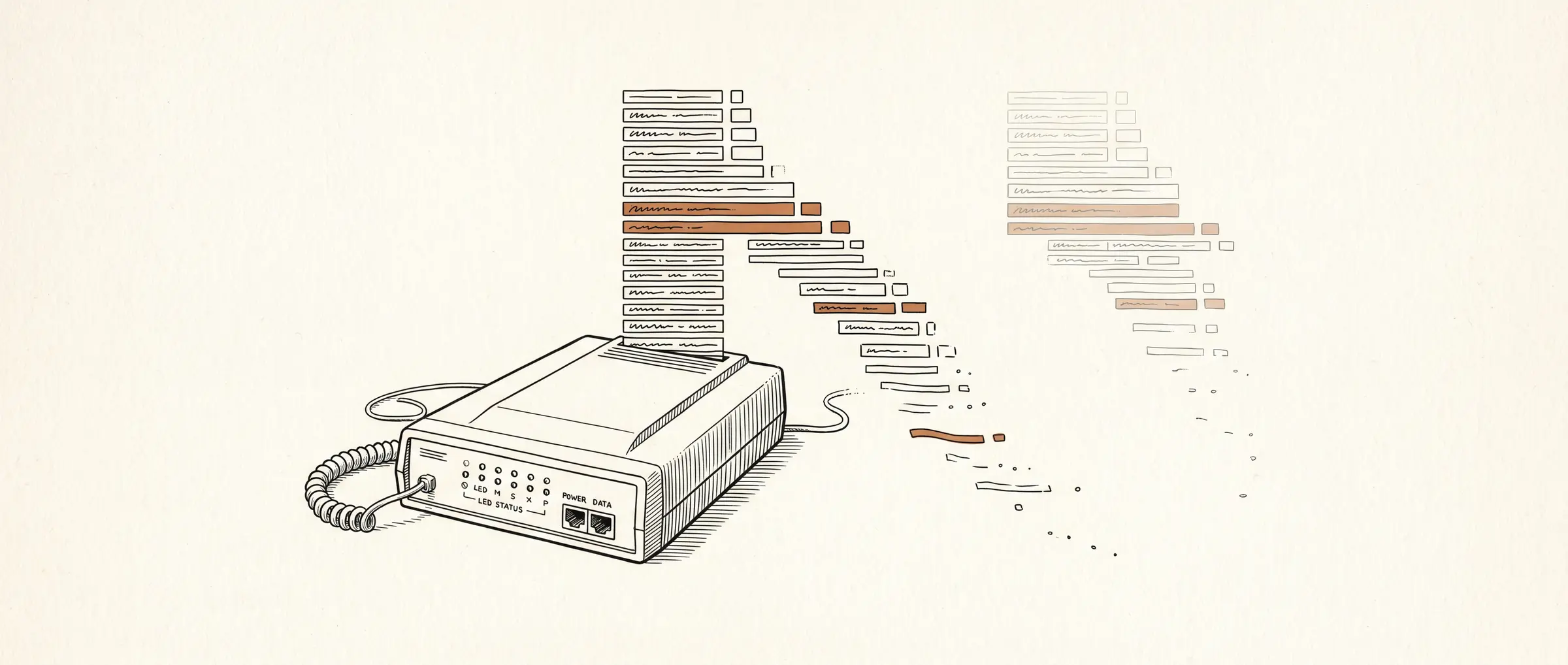
Do you remember the sound?
The shriek and hiss of a modem talking its way onto the network. I used to dial in late at night, after everyone was asleep, so I wouldn’t tie up the phone. I’d sit there in the dark and listen to that handshake like it was two machines whispering a password to each other, and I’d hold my breath through the part where it could still fail. Then it would catch. You were online. To anyone walking past it was just noise. To me it was a door opening.
If you lived through it, you already feel where this is going. If you didn’t, stay with me, because I think you’re feeling a version of it right now and you just haven’t noticed yet.
When slow felt like magic
Dial-up was painfully slow. A photo loaded one strip at a time, top to bottom, and you’d sit there building the picture in your head, guessing what it was before it finished. A single song took most of a TV episode to come down. You waited for things the way you wait for a kettle.
And it was fragile in a way that’s hard to explain to anyone who came later. The internet and the phone shared one line, so being online meant the phone was busy, and anyone who picked up a receiver in another room walked straight into your connection. You’d be ninety percent through a download and hear a click, then that ugly burst of static screeching out of the earpiece, and you knew before they did: the line was gone, the file was dead, start over from zero. Half the arguments in my house were about somebody needing to “make a quick call.” I learned to shout I’m online! down the hallway like it was a thing worth defending. Sometimes it worked. Sometimes the modem dropped mid-handshake anyway and I just sat there, staring at the broken progress bar, starting again.
And here’s the part I can’t get across to people who weren’t there: it still didn’t feel slow. It felt impossible. We were pulling things out of the air, out of machines on the other side of the planet, and the fact that any of it arrived at all was the whole miracle. The waiting wasn’t a flaw in the experience. The waiting was the part where you leaned in close and paid attention with your whole body. You watched it come.
None of us had any idea we were standing at the very beginning of something.
Watch what you do now
Type a question into an AI. Hit enter. The answer streams back, word by word, left to right, painting itself down the screen. You lean in. You watch it land. Sometimes you can feel where the sentence is going a half-second before it gets there, and something in you leans forward to meet it.
Same posture. Same held breath. Same quiet, slightly disbelieving sense that a machine on the other side of the glass is doing something it has no business being able to do.
Here’s what I keep turning over at night: this is dial-up. Not like dial-up. Actually dial-up. The 56k modem of intelligence. We are watching the image paint itself one strip at a time and calling it fast, because we have nothing faster to hold it up against yet.
I have proof of how slippery the word “fast” really is. I went digging and found a screenshot I took in 2012: a Windows ISO coming down at 3.8 megabytes a second, the whole 2.4 gigabytes due in about fourteen minutes. I remember the feeling exactly: pure, uncomplicated pride. After all those years of dial-up, watching a multi-gigabyte file land faster than I could make a sandwich felt like the future had finally walked through the door and sat down next to me.
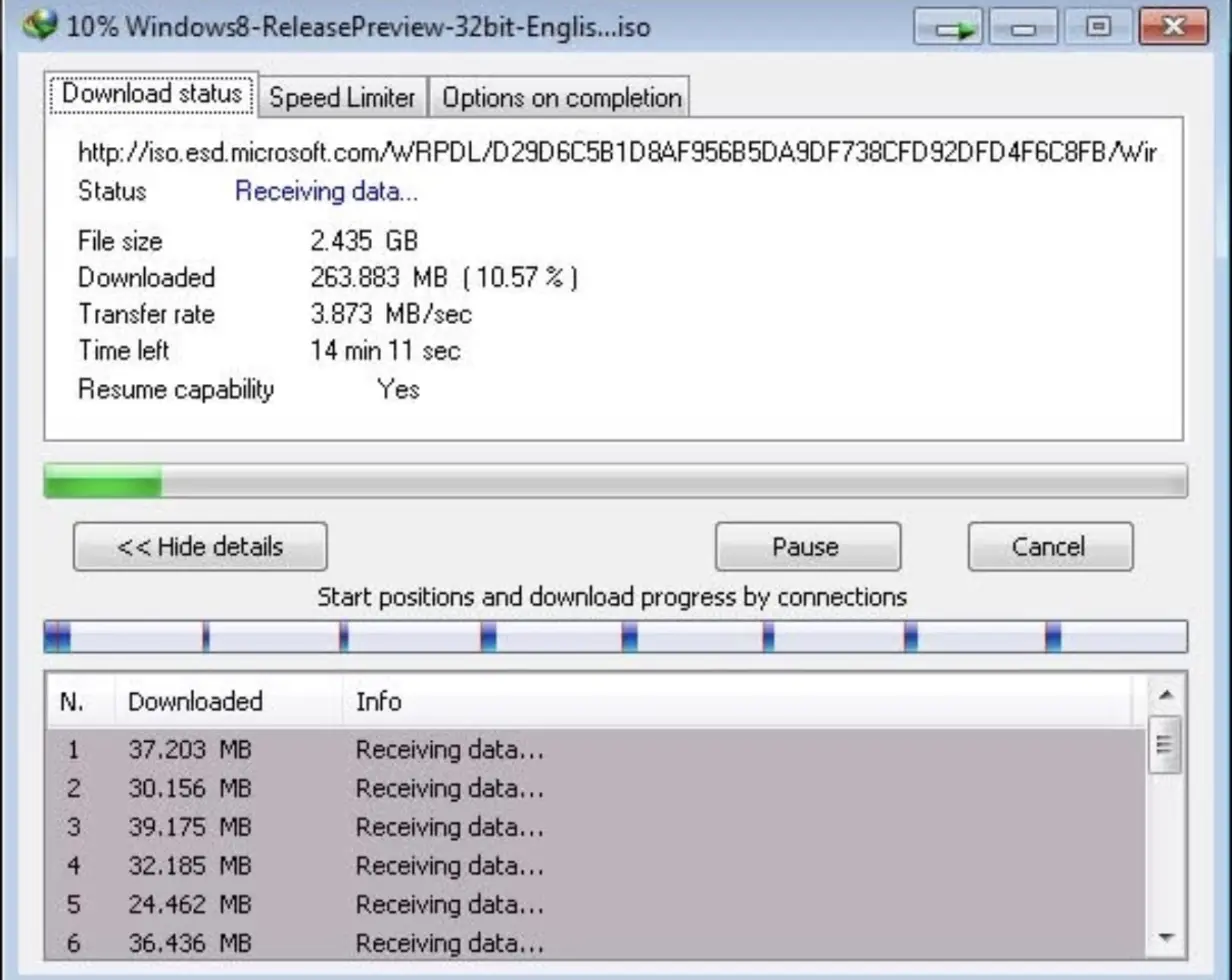
2012. I was so proud of this I saved the screenshot. 3.8 MB/s felt like flying. Today it would feel broken.
Look at me. I was thrilled. And I had no idea I was still, in every sense that matters, waiting. That’s the trap, and it’s worth saying out loud: every speed feels like the finish line while you’re standing on it. We never think we’re on dial-up. We always think we just got off it.
We’ve already walked this road
The internet didn’t stay on dial-up, and the thing that changed wasn’t really speed. Each step quietly deleted the waiting, and every single time the waiting vanished, we didn’t just do the old thing faster. We did things that had been unthinkable the day before.
Cable made you “always on.” No more dialing in, no more kicking your sister off the phone. The page arrived whole instead of strip by strip, and the internet stopped being an event you scheduled and became a utility you forgot about. The version of that for AI is the moment short answers simply appear, too fast to track token by token. You stop asking-and-waiting. You ask, and it’s already there.
Broadband pushed it further. Video, calls, the cloud. The connection slid into the background and you stopped thinking about it at all. You quit saying “let me get online.” You just were. The AI version is when the model stops being a place you go. It’s ambient, sitting quietly inside everything you touch, half-answering before you’ve finished forming the question.
Then fiber made the pipe basically invisible. Nobody watches a webpage load anymore; the loading simply isn’t there. And once the connection stops being the bottleneck, the only thing left in your way is your own imagination about what to do with it. That’s the last rung for AI too: the moment speed stops being the constraint, and the only limit left is what you can dream up to ask of something nearly instant and nearly endless.
I genuinely don’t know what gets invented at that stage. Neither did anyone listening to a modem in 1997. Try explaining a video call to them, or a stranger streaming their whole life to millions, and watch their face. That’s the whole point. The interesting part was never the faster version of what we already had. It was the things that only became possible once nobody was waiting.
The magic is on loan
Notice what we’ve started calling these things. The most powerful models we’ve built carry names like Mythos and Fable. Not version numbers. Myth. Fable. The words a culture saves for the stories it tells to hold what it can’t otherwise explain. We reached for the language of legend without quite meaning to, because somewhere underneath we already know what this feels like: something out of folklore, sitting calmly on the other side of the screen, doing the impossible like it’s nothing.
But here’s what the dial-up house taught me, and what I keep having to relearn: the magic is always more fragile than it lets on. Back then the whole connection died the instant someone in another room lifted a receiver. This past week I watched a much heavier hand reach for the phone. Spooked about who overseas might get the most capable versions, the U.S. government ordered them restricted, and the order landed so bluntly that Mythos and the just-released Fable went dark for everyone, everywhere, not only the people it was aimed at. The most astonishing thing most of us had ever touched, switched off overnight as collateral. A click on the line. The download gone.
I sat with that longer than I expected to. Not because of the politics. Because of how it felt. It was the same small, stupid heartbreak as the broken progress bar at 90%. A reminder that none of this is owed to us. The door we keep walking through can be closed, sometimes by accident, sometimes by people who don’t even know whose line they’re cutting. Which is exactly why I can’t bring myself to take a single day of it for granted.
So lean in while you can still feel it
There’s a strange gift in being early. The people who remember dial-up got something the kids raised on fiber never will: we felt the magic, because we could feel the friction. We knew what it was like back when the connection itself was the wonder, before it got buried under everything we built on top of it.
We’re those people again, right now, with this. We still lean toward the screen. We still watch the words arrive one at a time and feel a little catch in the chest, the sense of being present at the start of something we don’t have a name for yet.
So pay attention to it. Maybe I’m wrong about the timeline (I’ve been wrong before), but I’d bet almost anything that this slowness, this clunky, miraculous, dial-up slowness, is the most awake any of us will ever be to this technology. Soon it’s cable. Then broadband. Then fiber. Then nothing you’d even think to mention.
One day you’ll try to describe what it was like to watch the tokens arrive, one at a time, holding your breath a little, and someone younger will give you the exact look kids give you now when you imitate the sound of a modem.
That sound meant a door was opening.
So does this one. Stand in it while it’s still open.